





The CBD industry has really taken off in the US, and packaging compliance is becoming an important issue for CBD companies. There are many things involved when it comes to making the product, putting labels on it, and promoting it. Packaging is just as crucial as all these other steps, but failure to comply with child-resistant packaging laws can cause issues like non-compliance, product recalls, and even financial penalties.
CBD businesses have to understand the importance and purpose of child-resistant packaging. These laws are dynamic and can vary according to the product and even from one state to another where the product is being marketed. This guide aims to take you through all the necessary information that you need to know about CBD packaging.
Why Child-Resistant Packaging Matters
The objective of child-proof packaging is to prevent any possible harm to children by keeping them away from such products. Many CBD-based items, particularly gummy candies and edibles, can resemble candy and other foods. If not taken care of, it could be a major issue if accidentally ingested.
Child-resistant packaging should not be used to make products inaccessible. It is supposed to be difficult for children below 5 years old, but easy for adult consumers.
Besides being compliant, the packaging with safety concerns creates customer confidence and hence increases sales of the company producing that product. Consumers will tend to patronize companies that care about their safety.
Expert Tip: Many CBD businesses mistakenly assume that adding a warning label is enough. In reality, child-resistant functionality and regulatory compliance are separate requirements.
What Is Child-Resistant Packaging?
One of the aspects that is not known by a lot of people is the difference between child-resistant and child-proof packaging since there is no such thing as 100% child-proof packaging.
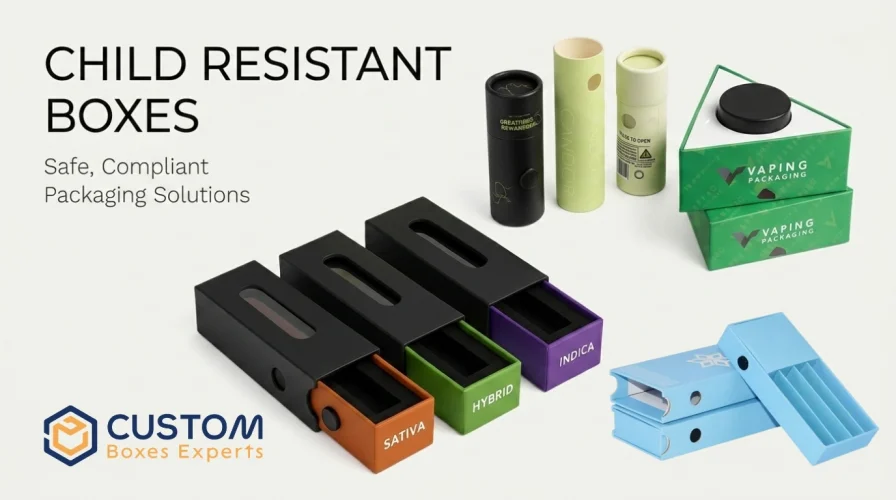
Child-resistant packaging offers ways to open which are not easy for children to achieve.
Common examples include:
Push-and-turn caps
Squeeze-and-pull closures
Locking lids
Child-resistant pouches
Slide-and-lock mechanisms
These packaging systems are engineered to deliver certain levels of performance and be easily accessible for adults.
Choosing correctly tested packaging is just as crucial as packaging design for CBD brands.
Understanding Federal and State Requirements
Question about child-resistant packaging in the United States is linked to the Poison Prevention Packaging Act (PPPA). The purpose of this act is to prevent any cases of unintentional poisoning among children.
Requirement | Federal | State |
Child-resistant packaging | Yes | May vary |
Tamper-evident packaging | Sometimes | Often required |
Warning labels | Limited | State specific |
Batch ID | Depends | Common |
Usage Instructions | Recommended | Often required |
Regulatory agencies require manufacturers to adopt child-resistant packaging in order to control access to hazardous materials for children.
Although there are some federal regulations, there are many state-level requirements for CBD packaging. This presents a problem for brands that sell their products in several states.
Some states mandate packaging for nearly all ingestible hemp-derived products to be child-resistant, whereas others mandate child-resistant packaging based on the type of product, format, or amount of cannabinoids.
In addition to child-resistant features, states may require:
Tamper-evident packaging
Product warning labels
Ingredient disclosures
Batch identification information
Usage instructions
When regulations are constantly changing, CBD brands must regularly check the compliance rules in all markets they sell in.
Which CBD Products Usually Require Child-Resistant Packaging?
Not all CBD products have the same packaging requirements. Generally, product regulations are the strictest for products that are swallowed.
CBD Gummies
One of the most regulated products, CBD gummies tend to have a candy-like appearance. Packaging that is child-resistant is often demanded to assist in preventing unintended access.
CBD Capsules and Softgels
A category that often requires extra protection in packaging is capsules and softgels, which are taken by mouth.
CBD Tinctures
Child-resistant dropper caps are a common feature of many tincture packaging. These closures promote greater adult consumer convenience while enhancing safety.
CBD Concentrates
CBD products that are formulated as concentrations may also need child-resistant packaging, depending on the concentration and the laws of the state in which they are being sold.
Brands should never take for granted that a single packaging design will meet the needs of all products.
Certification and Testing Requirements
There are lots of companies that make the same error about assuming that a package is kid-safe merely because it has the word child-resistant on it.
Testing and certification are a requirement for regulatory compliance. The regular testing methods used to assess how easily children can open packages involve checking if they can open the package in a given amount of time.
Testing also helps to ensure that the adults do not have to open the package and use it with undue difficulty.
The brands should obtain brand-specific packaging documentation from the manufacturer before requesting packaging that is child resistant. This would ensure compliance with regulations and reduce regulatory risks.
Balancing Compliance and Branding
The packaging concerns are a major concern to many CBD companies, as they fear that this will diminish the branding opportunities. Fortunately, modern packaging solutions enable brands to comply while simultaneously having a strong visual identity.
These are the components that can be included in today's child-resistant packaging:
Custom printing
Premium graphics
Foil stamping
Embossing
Matte or gloss finishes
Sustainable materials
This enables businesses to make attractive and compliant packaging. The best CBD brands make safety a part of the packaging design, instead of an afterthought.
Common Packaging Mistakes to Avoid
CBD businesses typically face numerous compliance issues due to a number of errors.
These range from standard packaging that hasn't been tested for child-resistant features, not checking state regulations, going with a packaging solution that is not tested, and designing the packaging for looks, not performance.
A common mistake made is to think about packaging requirements only when launching the product. In order to make sure that no changes have to be made after designing, it is essential to take into account any compliance issues from the start.
By working with experienced packaging companies, businesses can avoid all these problems and come up with effective solutions.
Final Thoughts:
A lot of the CBD products being sold in the United States have to come in child-proof packaging. With continued changes to regulations, it is important for companies to know the federal laws as well as the state laws.
Gummy, capsule, tincture, and concentrate formulas sometimes necessitate additional packaging precautions in order to reduce the risk of unintended access by children. However, when it comes to packaging products, there must be a careful balance struck between these factors.
Custom Boxes Experts are finding that there is an increasing need for compliant packaging solutions that adhere to the brand’s quality standards. Several firms have noticed that there is a trend of requiring packaging solutions that adhere to compliance and brand standards, such as keeping the product’s quality intact. Child-resistant packaging from the beginning will ensure consumer safety, build customer confidence, and set the stage for a successful and sustainable business model.