





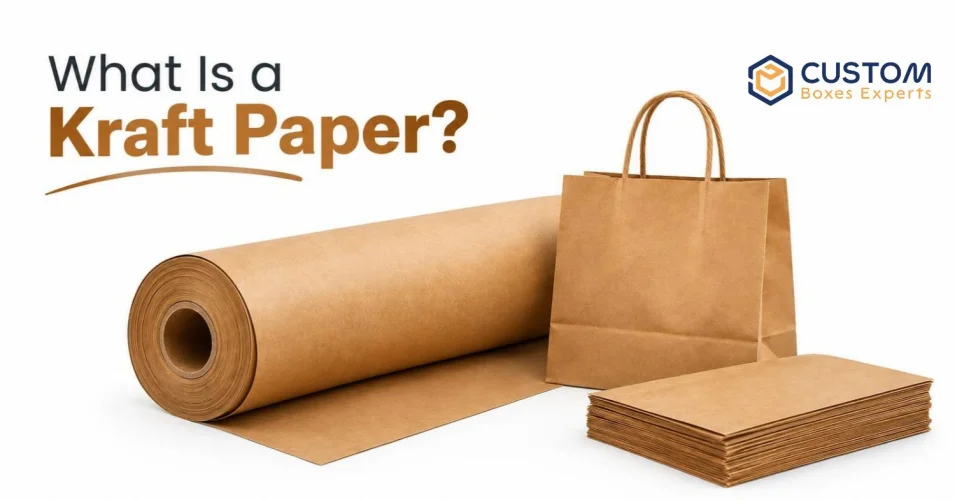
Kraft paper is a strong paper made from wood pulp and widely used for wrapping, bags, kraft boxes, and shipping.
It is known for its natural brown color, good tear resistance, and versatility across different industries. Businesses use it to protect products, carry goods, fill empty spaces in shipping boxes, and create simple, professional packaging.
Kraft paper is available in different grades, weights, colors, and finishes to suit various packaging needs. Some types use virgin wood fibers, while others use recycled fibers. Certain grades also receive special treatments for better moisture or grease resistance. Understanding these differences helps you choose the right material for your products. In this guide, you will learn what kraft paper is made of, its main types, common packaging applications, benefits, environmental impact, and how to select the right grade.
What Is Kraft Paper?
Kraft paper is a durable paper material produced through a chemical pulping process that separates wood fibers while retaining much of their strength. It is commonly used for packaging because it offers good tear resistance, flexibility, and dependable performance in everyday handling.
Unlike many lightweight papers designed mainly for writing or printing, kraft paper is often manufactured for practical uses such as wrapping products, carrying groceries, protecting items, and preparing shipments. Its natural brown color comes from unbleached wood pulp, although manufacturers also produce white and other colored varieties.
Kraft paper strength depends on fiber quality, weight, manufacturing process, and intended application. Thicker grades generally provide more material strength, while lighter grades work well for wrapping and filling empty spaces.
Businesses use kraft paper in paper bags, retail packaging, protective wraps, and shipping materials. It also serves as a base material for kraft paperboard and corrugated packaging. These different formats make it useful for products ranging from handmade soaps to groceries and e-commerce orders.
Why Is It Called Kraft Paper?
The word "kraft" comes from the German word for "strength." The name reflects the strong paper produced through the kraft pulping process.
This manufacturing method became widely used because it produces pulp suitable for making durable paper products. Kraft paper became especially popular in packaging applications where resistance to tearing and handling damage matters.
Today, the term describes a broad range of paper grades rather than one specific color or thickness. Natural brown kraft paper is the most recognizable type, but white kraft paper, recycled kraft paper, and coated varieties are also available.
What Is Kraft Paper Made Of?
Kraft paper is primarily made from wood pulp, which contains cellulose fibers. Manufacturers commonly obtain these fibers from softwood trees, hardwood trees, or a combination of both.
Softwood fibers are generally longer and help improve tear resistance and strength. Hardwood fibers are usually shorter and can contribute to a smoother surface and better formation. The exact fiber mixture depends on the desired paper properties.
During kraft pulping, wood chips are cooked with chemicals, mainly sodium hydroxide and sodium sulfide. This process removes much of the lignin that binds the wood fibers together, allowing the fibers to be separated and processed into paper.
After pulping, the fibers are washed, prepared, and formed into sheets. The paper may then be dried, pressed, cut, or treated to achieve the required weight and finish.
Some kraft paper grades also contain recycled fibers from recovered paper products. The amount of recycled material varies by manufacturer and product specification.
Kraft vs. Regular Paper
Kraft paper is generally stronger and more tear-resistant than many types of regular paper. It is widely used for packaging, paper bags, wrapping, and shipping materials, while regular paper is commonly used for writing, printing, and office tasks.
Kraft paper usually has a natural brown appearance, although white varieties are available. Both types support printing, but kraft paper is often preferred for durable packaging and a natural look.
What Are the Different Types of Kraft Paper Used in Packaging?
Kraft paper comes in several types, each designed for particular packaging requirements. The main differences involve fiber composition, color, weight, surface treatment, and resistance to moisture or grease. Choosing the right type helps businesses balance product protection, printing quality, appearance, and cost.
Natural Brown Kraft Paper
Natural brown kraft paper is usually made from unbleached wood pulp. Its earthy color and simple appearance make it a popular choice for businesses that prefer a natural-looking packaging style.
It is commonly used for wrapping paper, shopping bags, paper sacks, void fill, and protective layers inside shipping boxes. Depending on its weight and construction, it can also be used for bag production and other demanding packaging applications.
Natural brown kraft paper works well for minimalist branding, black printing, and simple logos. Its surface may be less suitable for highly detailed or bright-color designs than a white printing surface, so the final appearance depends on the paper grade and printing method.
White Kraft Paper
White kraft paper is made using a process that produces a white surface, often through bleaching or other suitable manufacturing methods. It combines kraft paper's useful properties with a cleaner look for branded packaging.
Businesses use it for shopping bags, wrapping, labels, and packaging that requires clear product information or a brighter design. White paper provides a more neutral background for colored graphics and logos.
However, print results depend on the paper's smoothness, absorbency, coating, and the printing technology used. Not every white kraft grade offers the same print quality or strength.
Recycled Kraft Paper
Recycled kraft paper contains fibers recovered from used paper and cardboard products. These fibers are processed and reused to manufacture new paper for suitable packaging applications.
Common uses include protective wrapping, paper bags, box liners, and void fill. Its appearance and performance depend on the quality and proportion of recycled fibers used during production.
Recycled paper may vary in color, smoothness, and strength. Therefore, businesses should check the manufacturer's specifications before selecting it for heavy products or packaging that requires consistent printing.
Also verify the actual recycled content. The word "recycled" does not automatically mean a product contains 100% recycled material.
Coated and Specialty Kraft Paper
Coated and specialty kraft papers receive additional treatments to improve specific properties. Depending on the grade, these treatments may provide better grease resistance, moisture resistance, surface smoothness, or print performance.
For example, food businesses may use grease-resistant paper to wrap certain baked goods or takeaway items. Retailers may choose a smoother coated grade when they need more consistent printed graphics.
Some specialty papers use barriers or laminations to limit moisture, oil, or other substances from moving. However, these materials do not all provide the same level of protection.
Before choosing a specialty grade, check its intended use, performance specifications, and disposal requirements. Certain coatings can also make recycling more difficult.
How Is Kraft Paper Used for Packaging?
Kraft paper is used across retail, food service, manufacturing, and shipping because it is available in different weights and formats. It can wrap individual products, form bags, support printed boxes, and protect goods during transportation. The right application depends on the paper grade and the required level of protection.
Kraft Paper for Wrapping and Cushioning
Kraft paper is commonly used to wrap products and protect them from scratches, dust, and minor surface damage during handling. Businesses also place it between products to reduce direct contact and help prevent scuffs.
In shipping boxes, crumpled kraft paper can fill empty spaces and help limit product movement. For example, an online store selling ceramic mugs may wrap each mug in kraft paper and add extra paper to fill gaps inside the shipping carton.
This method helps organize contents and provides cushioning for light-duty shipping. However, ordinary kraft paper is not a replacement for stronger protective materials when shipping fragile, heavy, or high-value items that require impact protection.
The paper's weight, quantity, and packing method should match the product's size, weight, and fragility.
Kraft Paper Bags and Shopping Bags
Kraft paper is widely used to manufacture shopping bags, grocery bags, takeaway bags, and industrial paper sacks. Its strength makes it suitable for carrying many everyday products when the paper weight and bag construction are appropriate.
Retail stores use kraft shopping bags for clothing, accessories, gifts, and other purchases. Grocery businesses use suitable grades for dry food items, while restaurants may use paper bags for takeaway orders.
Manufacturers can add twisted paper handles, flat handles, gussets, and printed logos to suit different applications. Gussets expand the bag's capacity, while reinforced handles help support the intended load.
The required paper weight depends on the products being carried. A lightweight bag for small purchases needs different specifications from a reinforced bag designed for heavier items.
Kraft Paper in Custom Boxes and Folding Cartons
Kraft paper and kraft paperboard are important materials in product packaging. They create folding cartons, retail boxes, soap boxes, gift boxes, and certain cosmetic packaging formats.
Paperboard is thicker and more rigid than ordinary kraft paper. It provides the structure a box needs to hold its shape, protect the product, and support printed branding.
For example, a soap manufacturer may choose a kraft-style folding carton to hold individual bars. A cosmetic business may use a kraft paperboard box with a printed logo and product details to create a consistent retail presentation.
Manufacturers can customize these boxes with different dimensions, tuck-end closures, windows, inserts, and printing options. The selected structure should match the product's dimensions, weight, and display requirements.
Not every kraft-style box is made entirely from kraft fibers. Some products use kraft paper wrapped around a different board or use a kraft-look printed surface. Checking the material specification helps clarify the actual construction.
Kraft Paper for Shipping and Corrugated Packaging
Kraft paper is widely used in corrugated packaging, including shipping cartons, e-commerce boxes, and protective packaging. In these applications, it often forms the outer liner or inner liner of corrugated board.
Corrugated board consists of flat liner sheets bonded to a fluted paper layer. The fluted structure adds rigidity and helps the board resist compression and impacts during handling.
For example, an online retailer may ship clothing, home accessories, or packaged consumer goods in a corrugated box with kraft-colored outer liners. The box can also include printed handling instructions, branding, or shipping information.
A shipping box's performance depends on its full corrugated structure, including flute type, liner weight, board construction, and box design. Kraft liner paper contributes to the board's properties, but color alone does not determine the strength of the finished carton.
Kraft Paper for Food Packaging
Kraft paper is used in food packaging for suitable paper bags, bakery wraps, takeaway packaging, and food containers. Bakeries may use it for bread bags, while restaurants may use paper bags for packed orders.
However, food packaging requires more than an appropriate appearance or paper weight. The material must be suitable for its intended food contact, temperature, moisture level, and exposure to oils or grease.
For example, ordinary kraft paper may work for dry bakery products, but oily foods may require a grease-resistant grade. Wet or hot foods may need additional barriers to prevent leakage and maintain packaging performance.
Businesses should check the manufacturer's food-contact documentation and applicable regulations before selecting a grade. Coatings, adhesives, and other components must also be appropriate for the intended application.
What Are the Benefits of Kraft Paper for Packaging?
Kraft paper offers several practical benefits for businesses that need versatile and functional packaging. Performance depends on the selected grade, but the material offers useful options for everyday packaging and shipping.
Strength and durability: Suitable kraft grades offer good tear resistance and support many wrapping, bag, and packaging applications.
Versatility: Manufacturers produce kraft paper in different weights, colors, finishes, and formats to meet different requirements.
Printing and customization: Businesses can add logos, product details, handling instructions, and other printed designs to suitable grades.
Recyclability: Many uncoated kraft paper products can enter paper recycling streams where local facilities accept them.
Natural appearance: The brown surface suits minimalist, rustic, and understated packaging designs.
Material efficiency: Lightweight paper may help reduce packaging weight when it replaces heavier materials in suitable applications.
Another benefit is its availability in several forms, from thin wrapping sheets to stronger bag paper and kraft liners for corrugated board. This range lets businesses choose a material based on product protection, presentation, and handling needs, rather than using one grade for every purpose.
Is Kraft Paper Waterproof?
No, ordinary kraft paper is not waterproof. Untreated kraft paper absorbs moisture, which can weaken its fibers, reduce its stiffness, and affect its ability to protect products.
Moisture resistance depends on the paper's composition, density, and any treatments applied during manufacturing. Some grades tolerate limited moisture exposure better than others, but that doesn't make them fully waterproof.
Coated kraft paper, barrier-treated paper, and laminated materials offer additional protection for specific applications. For example, a suitable grease-resistant grade may work for certain food wraps, while a moisture-barrier material may be more appropriate for products exposed to damp conditions.
However, water-resistant and waterproof are not interchangeable terms. Businesses should review test results and product specifications before choosing packaging for wet environments.
Some coatings and laminations may also affect recyclability. The right choice depends on the required protection and the available disposal options.
Is Kraft Paper Environmentally Friendly?
Kraft paper can suit businesses seeking paper-based packaging, but its environmental impact depends on how it is produced, used, and disposed of.
Many kraft paper products are made from wood fibers, which may come from responsibly managed forests or other verified sources. Some grades also contain recycled fibers, reducing the need for virgin fiber.
Uncoated kraft paper is often recyclable where local facilities accept it. However, food residue, plastic laminations, certain coatings, and attached materials may prevent a product from entering the usual paper recycling stream.
It is also important to distinguish between recyclable, biodegradable, and compostable materials. These terms describe different properties and disposal conditions. Not every kraft paper product is suitable for home composting or industrial composting.
Businesses should check fiber sourcing, recycled content, certifications, coatings, inks, and local recycling guidance before making environmental claims. Choose the option that provides the required protection while matching the product's actual disposal and recovery options.
How Do You Choose the Right Kraft Paper for Packaging?
Choosing the right kraft paper starts with understanding your product and how you'll handle the packaging. Consider these factors before selecting a material:
Product weight and fragility: Heavy or fragile products may require stronger paper, reinforced construction, or additional protective materials.
Paper weight and strength: Compare paper grammage, tear resistance, and other relevant performance specifications. Higher grammage alone does not guarantee better performance in every application.
Packaging format: Wrapping paper, shopping bags, folding cartons, and corrugated shipping boxes require different grades and constructions.
Printing and branding: Consider the surface color, smoothness, ink compatibility, and level of detail required for your logo and graphics.
Moisture and grease resistance: Select a tested treatment or barrier when the product may encounter water, oil, or damp conditions.
Food-contact requirements: For food packaging, verify that the complete material is suitable for the intended food and conditions of use.
Recycled content and disposal: Check the fiber composition, coatings, and local recycling options before choosing a grade.
The right kraft paper depends on your product, packaging design, handling conditions, and performance requirements. Review these factors with your packaging supplier to choose a practical material without paying for properties your product doesn't need.
Frequently Asked Questions About Kraft Paper
Is kraft paper the same as brown paper?
Kraft paper is a type of paper often recognized by its natural brown color. However, not all brown paper is kraft paper. Other paper types can also be brown because of their fibers, recycled content, dyes, or manufacturing methods. The material's production process and specifications determine whether it is kraft paper.
Can kraft paper be recycled?
Many uncoated kraft paper products can be recycled through suitable paper recycling programs. However, acceptance depends on local recycling rules and the material's condition. Paper contaminated with food, coated with certain barriers, or laminated with plastic may require different disposal methods. Always check local recycling guidance for the specific product.
Can you print on kraft paper?
Yes, kraft paper supports printing with suitable inks and printing methods. Businesses commonly add logos, product information, patterns, and handling instructions. Natural brown kraft paper creates a muted appearance, while white kraft paper offers a brighter background. The final result depends on the paper surface, ink, design, and printing process.
What is the difference between kraft paper and kraft paperboard?
Kraft paper is generally thinner and more flexible, making it suitable for wrapping, bags, and liners. Kraft paperboard is thicker and stiffer, making it suitable for folding cartons and product boxes. The right choice depends on whether the packaging needs flexibility, structural support, or both.
Is kraft paper strong enough for shipping?
Kraft paper suits several shipping applications, including wrapping products, filling space, and forming corrugated box liners. However, ordinary kraft paper alone may not adequately protect heavy or fragile items. For shipping boxes, strength depends on the complete corrugated construction, including its liners, fluting, and design.
Can kraft paper be used for food packaging?
Yes, suitable kraft paper grades are used for food bags, bakery wraps, and takeaway packaging. However, not all kraft paper products are safe for direct food contact. The selected grade must meet the requirements for the intended food, temperature, moisture, and grease exposure. Check the manufacturer's documentation before use.
Final takeaway:
Kraft paper is a versatile packaging material used in wrapping, bags, product boxes, and shipping cartons. Choosing the right grade depends on strength, surface finish, moisture resistance, food-contact suitability, and end-of-life options. When these factors match your product's needs, kraft paper provides a practical foundation for functional packaging and clear brand presentation.