





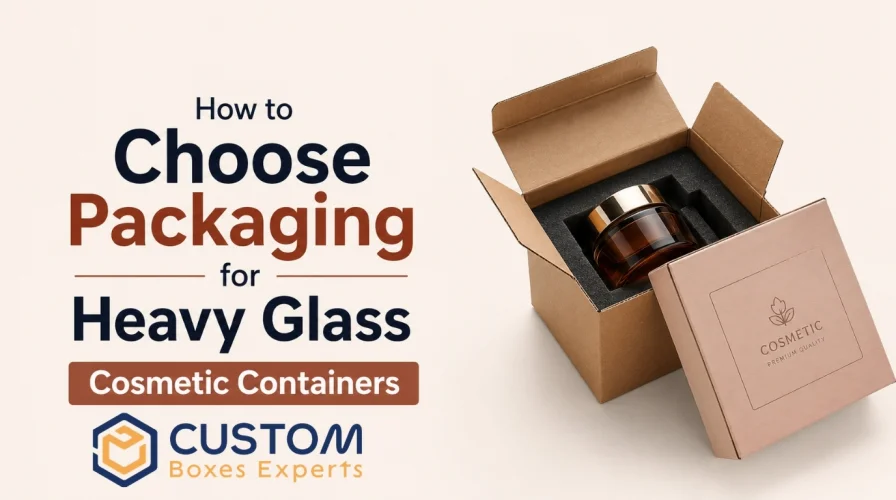
Heavy glass cosmetic containers require strong, protective cosmetic packaging to prevent breakage during shipping and handling. Choosing the right solution involves considering container weight, dimensions, closures, and shipping conditions. Custom inserts, cushioning materials, and sturdy corrugated boxes help secure products and reduce movement. At Custom Boxes Experts, we provide customized packaging solutions that protect glass jars, serum bottles, and other cosmetic containers while maintaining a professional presentation.
Why Do Heavy Glass Cosmetic Containers Need Special Packaging?
Glass provides a premium appearance that many cosmetic brands prefer for their products. It feels substantial, showcases the product beautifully, and gives skincare and beauty collections an elegant presentation. However, its weight and fragile nature create specific packaging challenges.
Here are some reasons why heavy glass containers need additional protection.
1. Glass Can Crack Under Sudden Impact
Glass containers can break when they hit hard surfaces or collide with other products. Even if the outer shipping carton remains intact, an unprotected bottle or jar may crack from an internal impact.
A protective insert helps hold the container in position and reduces direct contact with the box walls.
2. Heavy Containers Put More Pressure on Packaging
A heavy glass jar requires more structural support than a lightweight plastic container. If you place several jars inside an unsuitable carton, their combined weight can strain the bottom panel and weaken the packaging during handling.
You should select an outer box and internal support system that can accommodate the total loaded weight.
3. Glass Containers Can Collide During Transportation
When multiple glass bottles or jars share one shipping box, movement can cause them to knock against each other. This may result in cracks, chipped edges, damaged caps, or scratched surfaces.
Individual compartments and dividers help separate containers and maintain their positions.
4. Cosmetic Closures Also Need Protection
The glass body is not the only part that needs attention. Pumps, droppers, lids, caps, and dispensing mechanisms can become damaged when they receive pressure during shipping.
Your packaging should support the container without placing unnecessary force on these components.
5. Damaged Packaging Can Affect Product Presentation
Cosmetic packaging contributes to the customer's overall perception of a product. A cracked jar, damaged label, or dented box can make an otherwise premium product appear poorly handled.
Why Heavy Glass Wrecks Weak Packaging
Here's the thing about glass. It doesn't bend, it doesn't compress, it just breaks. So when a box wall flexes under stacked weight, that pressure has nowhere to go except straight into the container.
Three things tend to go wrong, and they go wrong quietly until they don't:
Box walls start bowing under stacked shipments. Bottoms give out mid-handling. Glass shifts around inside a loose box and cracks the second it hits something solid.
Cosmetic Boxes built for lightweight tubes and pumps almost never survive the jump to real glass weight. They weren't designed for it. Simple as that.
Board Strength Matters More Than Box Size
People obsess over dimensions. Wrong focus. A box can be sized perfectly and still fail if the board itself can't carry the load.
Double Wall Corrugated
The double wall board adds a second fluting layer, and that second layer is doing real work. It spreads impact across a wider surface instead of letting one spot absorb the whole hit. Think of a shock absorber, except cardboard.
Rigid Setup Boxes
Rigid Stock is dense. Non folding. It holds its shape even when something heavy is leaning against it, which makes it a natural fit for premium cosmetics packaging box designs where the unboxing moment matters just as much as the drive to your doorstep.
Weight Rating, Actually Check It
Boards carry burst strength and edge crush ratings. A box that scores fine for lightweight items can flat out fail once actual glass weight enters the picture. Check the rating. Don't guess.
Custom Cosmetic Boxes Wholesale Built Around the Container
This is where custom cosmetic boxes wholesale earn their keep. A box built around the exact container shape stops movement before it starts, and movement is basically the root cause of most glass breakage during shipping.
A few things worth checking before placing a bulk order.
Wall thickness is rated for the container's real weight, not an estimate. A base built to carry weight without bowing under it. Reinforced corners, since corners take the brunt of drops. A snug interior fit with zero wiggle room.
On top of that, ordering cosmetic packaging wholesale in volume tends to lower unit cost too, since the structure only needs to get engineered once and then produced at scale.
Inserts Are Doing More Work Than People Realize
Even a rock solid outer box means nothing if the glass can slide around inside it. Inserts are what actually lock things in place.
Die cut cardboard trays shaped to the container base. Foam inserts for anything oversized or unusually dense. Corrugated dividers for multi container sets. Molded pulp trays for brands leaning eco friendly.
A tight insert closes the gap between glass and cardboard. And that gap, small as it looks, is exactly where cracks tend to start.
Makeup Box Packaging for Sets With Multiple Bottles
Sets are trickier. Multiple heavy containers packed together means they can knock into each other, not just against the box wall. Makeup box packaging built for sets needs to separate every piece on its own.
One compartment per container, never shared. Padding between every divider. A lid or flap secure enough to stop shifting mid transit. And a drop test on the full set, because testing one bottle alone tells you nothing about how the whole set behaves together.
Comparison Table: Packaging Materials for Heavy Glass
Material | Strength Level | Best Use Case |
Single wall corrugated | Low | Light items, not heavy glass |
Double wall corrugated | High | Shipping heavy glass jars and bottles |
Rigid setup boxes | Very high | Premium single container presentation |
Very high | Dense or oversized glass containers | |
Molded pulp trays | Medium | Eco friendly brands, moderate weight |
Test It Before You Commit to a Full Run
Skipping the drop test is the single most common mistake in this whole process. A box can look bulletproof on paper and still crumble the moment a real container sits inside it.
Pack a sample with the actual container. Drop it from waist height, all sides, no exceptions. Watch for cracks, movement, seal failure. Adjust board weight or insert design if anything gives.
Wait, there's also a cheap way to catch problems early here. Order personalized packaging boxes as samples first, test them hard, and only then commit to the full print run. Saves money. Saves headaches too.
Conclusion:
Heavy glass containers need packaging engineered around actual weight, not just around how good the box looks on a shelf. Board strength, a tight structural fit, and inserts that actually hold the container still are what decide whether it survives the trip or shows up in pieces.
Custom Boxes Experts builds custom cosmetic boxes wholesale and makeup box packaging specifically for heavy glass containers, tested before full production ever begins.
Frequently Asked Questions
Can I use regular corrugated boxes for heavy glass jars?
Not really. Single wall stock bows under weight almost immediately. Double wall corrugated or rigid setup boxes hold up far better once actual glass weight gets involved.
How much does a proper insert add to packaging cost? Less than a replacement shipment, that's for sure. Foam and die cut trays cost more upfront than plain padding, but they cut breakage rates enough to pay for themselves fast.
Is rigid packaging always better than corrugated glass?
Depends on the goal. Rigid boxes win on presentation and shape retention. Double wall corrugated wins on shipping durability. Premium retail lines often use both, rigid for the shelf, corrugated for the outer shipper.
What's the fastest way to test if my current box is strong enough?
Pack a real container, not a mockup. Drop it waist high on every side. If anything cracks, shifts, or the box deforms, the structure needs a redesign before a full batch gets ordered.