





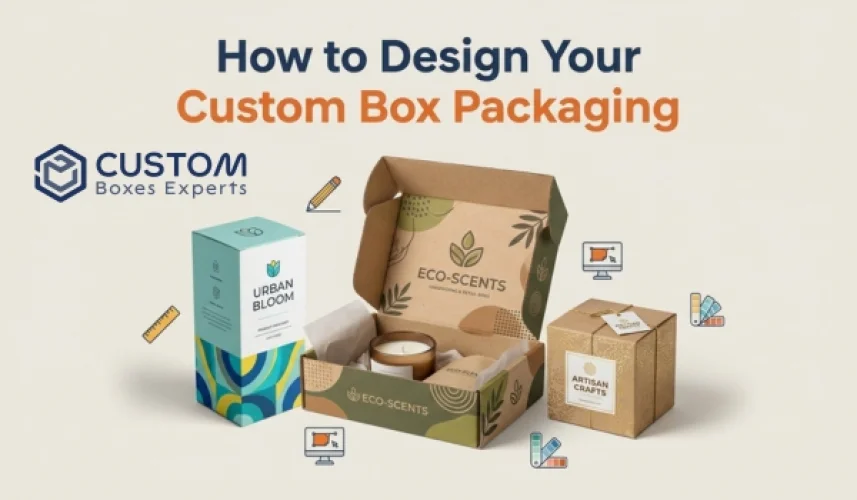
Custom boxes have evolved from being mere containers. They are now considered to be part of the branding and marketing experience. Custom boxes can make a difference in terms of product decisions, product protection, and brand recognition, whether it is for a new product release or for packaging an existing product line.
Many businesses pay a lot of attention to the graphics and forget about the structural design, material selection, and customers' expectations. Best custom packaging is all about function, form, and consistency.
This step-by-step approach will help you create a custom box packaging that will be as attractive as it is to perform well in your product's journey.
Why Custom Packaging Design Matters
Packaging is frequently the first point of contact customers will have with a brand. Studies have continually proven that consumers relate packaging quality to the quality of the product.
Well-designed custom boxes can:
Add perceived value to the product
Improve customer experience
Enhance brand recognition
Reduce product damage
Support marketing efforts
First, one needs to know what the function of your packaging is before picking colors, logos, or finishes.
Step 1: Define the Purpose of Your Packaging
The first thing to do when designing a package is to know what the main goal is.
Things to consider may be:
Will it be shipped or retail?
Will it be delivered or purchased online?
Is a luxury presentation important?
Will the packaging be used again?
Are there any inserts or compartments needed in the box?
These are some of the factors that would affect all future decisions in the design process.
For instance, durability might be a priority for an e-commerce brand, whereas packaging and unboxing may take priority for an expensive cosmetics brand.
Step 2: Measure Your Product Accurately
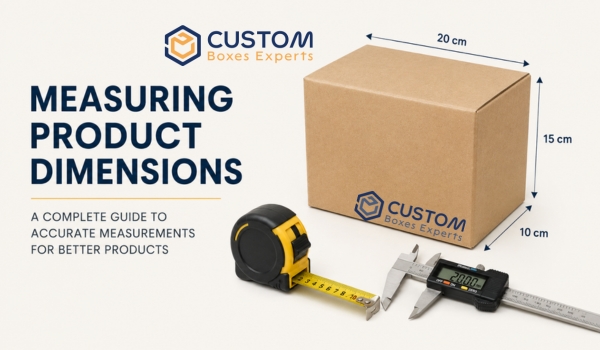
The biggest packaging error that people make is to create packaging designs without accurate product dimensions.
Accurate dimensions can minimize the risk of:
Over-movement during shipping.
Product damage
Wasted packaging materials
Increased shipping costs
Expert Tip: Based on our experience in custom packaging design, allowing 4–6 mm of clearance between the product and the box helps accommodate protective inserts while reducing product movement during shipping. The exact clearance depends on the product's size, weight, and fragility.
Step 3: Choose the Right Box Style
The packaging structure varies for different products. The key to selecting a box is to ensure it is the right one.
Popular custom box styles include:
Box Style | Best For |
Tuck End Boxes | Cosmetics, food, retail products |
e-commerce and subscription packaging | |
Sleeve Boxes | Premium retail packaging |
Luxury products and gifts | |
Shipping and transportation | |
High-end product presentation |
This structure needs to facilitate both product protection and consumer experience.
Step 4: Select the Right Packaging Material
The choice of packaging materials will affect its durability, appearance, and cost.
Some examples of packaging materials are paperboard, corrugated fiberboard, kraft paperboard, and chipboard.
Corrugated Material
Corrugated packaging is great for shipping and eCommerce solutions. It is fluted and absorbs impact during transportation.
Paperboard
Paperboard is lightweight yet cost-effective; thus, it is suitable for retail packaging and folding cartons.
Kraft Material
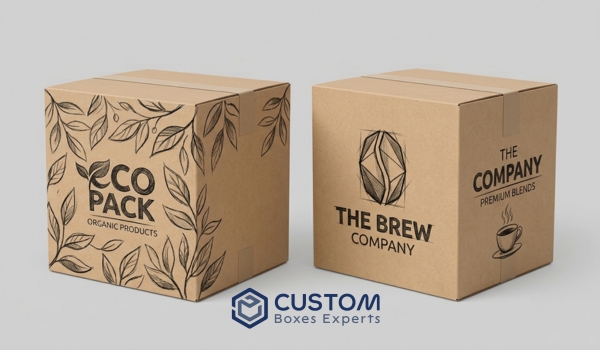
Brands that value the environment appreciate kraft packaging due to its natural look and recyclability.
Rigid Board
Rigid boards create sturdy, premium-feel packaging that elevates the perceived value of high-end products and enhances the overall customer experience.
Always choose a material that matches the weight, fragility, and shipping requirements of your specific product - the right material prevents damage and reduces unnecessary costs.
Step 5: Create a Strong Brand Identity
Many packaging designs fail because they focus purely on aesthetics while ignoring the brand story they should be telling.
The first thing that effective custom packaging should tell the reader is who you are as a company.
The following are some of the major constituents of the branding:
Logo placement
Brand colors
Typography
Taglines
Visual style
Brand messaging
When packaging, website, social media, and marketing are provided across the board, it creates recognition and trust.
Your customers should be able to recognize your brand even before opening the box.
Step 6: Design for the Customer Experience
Contemporary packaging plays more than only a protective role. But it's also about creating a memorable experience.
Consider the customer's unboxing experience and how they will feel.
These sorts of questions to ask are:
Does it open intuitively?
Does the packaging have a high-end appeal?
Are there readily available details?
Does the product have appealing packaging within the box?
It is very important to make thoughtful decisions, as it could mean a lot for the perception of the consumer.
Step 7: Choose Printing and Finishing Options
The look of custom packaging is largely determined by the quality of the print.
Many finishing techniques can enhance the design of packaging, making it professional.
Popular Packaging Finishes
Finish | Purpose |
Matte Coating | Smooth, sophisticated appearance |
Gloss Coating | Vibrant colors and shine |
Foil Stamping | Premium metallic accents |
Embossing | Raised design elements |
Debossing | Recessed design effects |
Spot UV | Highlights specific areas |
They make sure that packages stand out on retail shelves as well as reinforce the quality of the brand.
Step 8: Consider Sustainability
There is an increasing need for sustainability in packaging these days. Consumers always keep their eyes open for companies that have lowered their carbon footprints.
If producing custom packaging, think about:
Minimal material usage
Soy-based inks
Reusable packaging designs
Sustainable sourcing practices
Sustainable packaging is a powerful way to strengthen brand image, build customer trust, and meet the growing demand for environmentally responsible businesses.
Step 9: Test Before Full Production
Packaging is another aspect often overlooked by businesses: prototypes are not tested before final approval.
You can test a prototype using:
Product fit
Structural strength
Printing accuracy
Color consistency
Customer experience
Testing can help determine potential problems before making a large investment in production.
Any changes made in this phase can make a big difference in time and cost in the future.
Step 10: Optimize for Shipping and Storage
A beautiful box that doesn't work along the supply chain is no help.
Take into account the following:
Shipping costs
Warehouse space
Assembly requirements
Product protection
Stackability
It can cost more to operate and maintain packaging that looks good but has a negative effect on logistics.
The ideal custom packaging aligns branding and functionality.
Common Custom Packaging Design Mistakes
There are common packaging issues that many businesses face in package design.
The most usual errors are:
Choosing aesthetics over functionality
Ignoring shipping requirements
Using oversized packaging
Overcrowding designs with information
Neglecting brand consistency
Skipping prototype testing
The prevention of such issues would contribute to improving the quality of packaging and its effectiveness.
Final Thoughts
Package designing involves many aspects other than colors and logo designs. For example, a good packaging design needs a holistic approach incorporating structural design, choice of packaging materials, branding elements, customer interaction, and performance.
The use of proper strategies in packaging design will assist companies in developing boxes that fit their merchandise, protecting their products, building their brand image, and increasing customer satisfaction. All companies are now beginning to understand that packaging is not just about the product itself; it is part of the brand.
If you're looking for high-quality custom packaging for your products, our team can help you create packaging solutions that combine functionality, premium design, and reliable performance. Contact us today to discuss your packaging requirements and request a free quote.
FAQs
1. Why should businesses invest in custom packaging?
Customized packaging will contribute to the process of branding and the protection of goods.
2. Which type of material should one use for custom packaging boxes?
This depends on the nature of the products. For shipping boxes, corrugated cardboard should be used, and for luxury products, one should consider rigid boxes.
3. How can you select the correct box size?
Measure the product correctly and ensure that there is enough room to accommodate inserts, padding, or promotions if required.
4. Is sustainable packaging capable of achieving premium design?
Indeed, environmentally friendly packaging materials like Kraft paper and boards that are recyclable can be used along with good printing.
5. Should I test packaging before production?
Yes, testing will help in spotting any defects related to fitment, durability, print quality, and customer experience.