





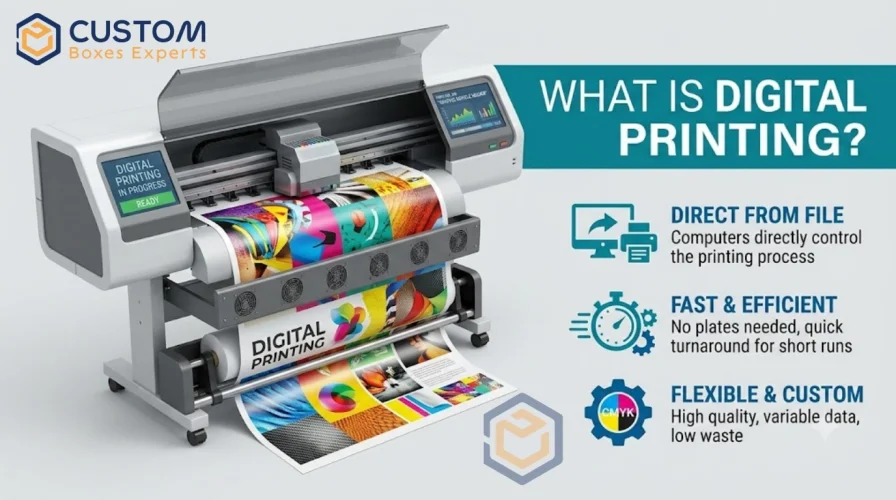
The use of digital printing is considered one of the major steps in changing the method used to put images and texts onto the physical surface. The process involves using the computer files that have been fed into the machine to print onto the surface directly.
When searching for the right production methods, understanding what is uv coating in packaging can help you choose the best finishes. This innovative mixture enables companies to make their highly durable and attractive displays that immediately attract the attention of customers.
What Is Digital Printing for Packaging?
Basically, digital printing is the process of imprinting digital file information directly on various media substrates. This technology is all about converting digital files, like PDF and Illustrator, into direct prints on objects without going through much trouble.
The total value of the digital printing market in the world was estimated at around USD 27.5 billion in 2023. It is expected to increase and hit above USD 48.2 billion by 2032 with a CAGR of 6.4%.
Digital Printing vs. Offset Printing
The primary difference between digital and traditional offset printing lies in the physical mechanics of transferring ink to paper boards. Offset printing uses special aluminum plates that are used to physically print ink on the blankets and then transferred to the desired surfaces.
Digital printing skips all the physical plates and simply sprays drops of ink directly on the substrates or prints using electrically charged toners. Although offset printing is very economical in the case of huge mass production, digital printing is much more cost-effective for custom quantity printing.
Digital Printing vs. Screen Printing
Screen printing is a manual printing method where ink of a thicker consistency is squeezed through a screen with an elaborate stencil design onto the surface. Every single color used in your artwork will require its own separate screen arrangement, increasing the cost of labor greatly.
On the other hand, digital printing uses several colors at once from a computer file and is therefore capable of producing extremely elaborate multi-colored artwork designs. It is therefore the superior method when it comes to printing complicated photographs and artistic designs.
Technical Comparison of Major Printing Methods
To help you understand where digital excels, here is a detailed breakdown of how it compares to traditional methods:
Feature | Digital Printing | Offset Printing | Screen Printing |
Setup Time | Minimal (Direct from file) | High (Requires plate making) | High (Requires screen setup) |
Minimum Order Quantity | Very Low (1 unit possible) | High (Typically 500+ units) | Medium (Typically 50+ units) |
Variable Data (VDP) | Fully Supported | Not Possible | Not Possible |
Turnaround Speed | Extremely Fast (Same day) | Several days to weeks | Moderately slow setup |
Color Complexity | Unlimited colors and gradients | Set spot colors or CMYK | Limited spot colors per run |
How Does Digital Printing in Packaging Work?
Some of the processes used in the manufacture include the design creation process, digital printing process, automatic ink printing process, and finishing process. The design can be created using a software application such as Adobe Illustrator. Then it is sent to the printer.
The digital printing process uses inkjet or laser techniques for transferring the designs onto your materials. After the designs are printed using ink, the sheets are transferred to the finishing area to make cuts, folds, and glues.
This process enables the manufacturer to make accurate structural prototypes of Custom Boxes before going into production. Through this process, mistakes are detected early in the prototype stage without wasting any raw materials and machine time.
Advantages of Digital Print in Packaging
There are several competitive benefits that come from using digital systems within your production process.
Excellent Customization: Firms can readily produce customized graphics that suit the brand image and corporate identity of the company.
Efficiency in Multi-SKU printing: The technique enables businesses to produce various designs at once without having entirely different machine setups.
Advantages of on-demand printing: Brands are able to produce prints based on their requirement, which reduces expensive warehousing costs.
Environmentally Friendly Manufacturing: This process does not use plates and hence produces less automated waste and uses water-based ink.
Disadvantages of Digital Print in Packaging
While this system offers incredible flexibility, certain material limitations and cost structures must be considered before starting your project.
First, using digital presses can lead to an increased cost per unit during the printing of large quantity orders. This is due to the fact that the continuing cost of digital inks and special materials will exceed the cost of offset inks.
Secondly, the digital printer system will not be able to match the Pantone Matching System (PMS) colors, and this may affect the uniformity of brand colors. Moreover, digital ink can face some durability challenges under very extreme weather conditions and at the point of retail sale.
Diverse Media Substrates for Digital Printing
The versatility of modern digital presses allows them to print on an incredibly wide range of physical materials. This unique capability makes it the ideal machine for producing beautifully crafted box packaging custom styles for local retail brands.
Using digital machinery enables operators to print directly on thick cardstocks, flexible plastics, metals, and standard corrugated shipping cardboards. It provides a reliable platform for brands looking to build consistent visual presentations across different product lines and sizes.
Digital Print Packaging Applications
Modern corporations utilize digital technology across a wide spectrum of market applications to boost their consumer engagement and sales.
Product Packaging: Making attractive packages for common food products, luxurious cosmetics, and high-end technology-based consumer goods.
Promotional Packaging: Producing special edition boxes, season-specific boxes, and promotional packaging sets to be used at retail launches.
Variable Data Printing: Printing serial numbers, regional codes, and text on the manufactured boxes.
Personalized Packaging: Designing customized subscriber boxes that have unique graphics, making them brand loyal and shareable.
How Digital Methods Empower Retail Businesses
It is possible that digital printing offers great opportunities whereby the providers can supply the best packaging boxes without the need to print in bulk. This will enable brands to experiment with new ideas in the marketplace without having to spend much time. Budgeting becomes easier by getting custom wholesale boxes from reliable partners with extra features.
By choosing professionally made custom-printed boxes, one gets to make sure that brand success is guaranteed. This is the same thing that big companies get on competing retail racks.
Are you ready to transform your product presentations and experience the speed of digital production for your upcoming marketing campaigns?
Get Started Today: Contact our team of packaging experts to design, print, and manufacture your premium boxes with zero hassle!
Frequently Asked Questions (FAQs)
What file formats should one use for digital printing?
File formats like AI, EPS, and high-resolution PDFs are good to use since they can be printed in any size without losing quality.
Is digital printing cost-effective when done in bulk?
While it is quite cost-effective when printing in smaller quantities, regular printing techniques are more cost-effective when mass producing in bulk.
Can digital printers work on dark materials?
Today's digital printers that have white ink find it easy to print on dark materials, making beautiful base prints.
How can one get perfect colors?
You should always design your artwork in CMYK mode and request a physical printed proof before starting full production.
What is the average turnaround time?
Because there are no complex plates to set up, digital projects can often be completed within 24 to 48 hours.